

ENERGY STAR Portfolio Manager is still the free tool almost every U.S. benchmarking law tells building owners to use, and it is changing hands. In 2026 the ENERGY STAR program began moving from the U.S. Environmental Protection Agency (EPA) to the U.S. Department of Energy (DOE). This guide explains what the move means for your annual benchmarking report, what has not changed, and how to set up a building in Portfolio Manager and earn an ENERGY STAR score.
Quick summary
- EPA and DOE finalized the ENERGY STAR Program Transition Plan on August 28, 2026. DOE is now the lead agency, and the full transition is planned to finish no later than one year after that date.
- Portfolio Manager is on the list of IT systems moving to DOE, with the IT hosting transfer targeted before July 2027. Until then, DOE leads tool operations even though the tool has not physically moved.
- The plan does not announce any change to the ENERGY STAR score, certification rules, or your login. Keep benchmarking as usual: city and state deadlines still apply.
- To get a 1–100 score you generally need an eligible property type, at least 5,000 sq ft (lower for some types), and 12 full consecutive calendar months of whole-building energy data.
What is happening to ENERGY STAR Portfolio Manager in 2026?
ENERGY STAR has been jointly connected to EPA and DOE for years, but EPA ran the commercial buildings side, including Portfolio Manager. Under a Memorandum of Agreement signed on March 3, 2026, DOE became the lead federal agency for the whole program. The agreement called for a written transition plan, and EPA and DOE published the final 2026 ENERGY STAR Program Transition Plan on August 28, 2026.
The plan also notes that EPA’s Fiscal Year 2026 appropriations law (Pub. L. No. 119-74) directed funding to the ENERGY STAR program. After a year of uncertainty about the program’s future, that matters for owners: the tool that most benchmarking ordinances are built on is funded and has a defined path forward.
Key transition dates
| Milestone | Date (per the transition plan) |
|---|---|
| EPA–DOE Memorandum of Agreement signed | March 3, 2026 |
| Agreement effective date | June 1, 2026 |
| Transition plan finalized | August 28, 2026 |
| Trademark and agreement transfer plan due | By September 1, 2026 |
| IT systems, including Portfolio Manager, move to DOE hosting | Targeted before July 2027 |
| Full transition complete | No later than one year after finalization (about late August 2027) |
What the plan says, and what it does not
The plan names Portfolio Manager as one of the systems to migrate and says DOE leads tool operations, maintenance and development even before the migration. It treats the ENERGY STAR score for commercial buildings as a program specification that carries over to DOE, along with the training materials for Portfolio Manager and the list of ENERGY STAR data sets and their data protections. It also keeps the existing approach to certification: owners report building data, and a licensed professional reviews and stamps it.
The plan does not say anything about account changes, planned downtime, new web addresses, changes to the score methodology, or the Portfolio Manager web services (API) that utilities and software vendors use. It also gives no action items for ordinary users. In practice, that means there is nothing you need to do today, but it is smart to watch for official emails from EPA and DOE as the hosting move approaches in 2027.
Do benchmarking laws still require Portfolio Manager?
Yes. Nothing in the transition plan changes city or state law. Programs such as New York City Local Law 84, California’s AB 802 benchmarking program, the Chicago Energy Benchmarking Ordinance and Energize Denver all collect data through Portfolio Manager, and their filing deadlines and fines stay in place. Many of the 2027 reports will cover calendar year 2026 data, so the work you do in Portfolio Manager this winter is what your city will see next spring.
Not sure which laws cover your building? Our benchmarking law hub lists requirements, thresholds and deadlines for more than 50 cities and states, and the compliance finder on our homepage tells you which ones apply to a specific address.
How to benchmark a building in ENERGY STAR Portfolio Manager
Portfolio Manager is free and web-based. EPA’s Get Started page walks new users through account setup and points to the “add property” and “add meters” wizards. Here is the practical order we follow for clients.
1. Collect your building information first
Download EPA’s data collection worksheet before you log in. It lists exactly what Portfolio Manager will ask for your property type: gross floor area, year built, weekly operating hours, number of workers, number of computers, and similar details. Having it ready avoids half-finished properties and guessed values that a verifier will flag later.
2. Create an account and add the property
Create a Portfolio Manager account, then use the add-property wizard. Enter the address exactly as it appears on your city’s covered-buildings list and add any building ID your jurisdiction assigns (for example, a BBL in New York City or a building ID in Denver). A wrong ID is one of the most common reasons a submitted report is not matched to the building.
3. Set up the property uses
A property can have several uses, such as office, retail and parking. Each use needs its own floor area and use details. Accurate property uses matter because the ENERGY STAR score compares your building with peers of the same primary use.
4. Add every meter and fuel
Create a meter for each energy source serving the building: electricity, natural gas, district steam or chilled water, fuel oil, and on-site solar. Portfolio Manager needs the whole building, including tenant-paid spaces, regardless of who receives the bill.
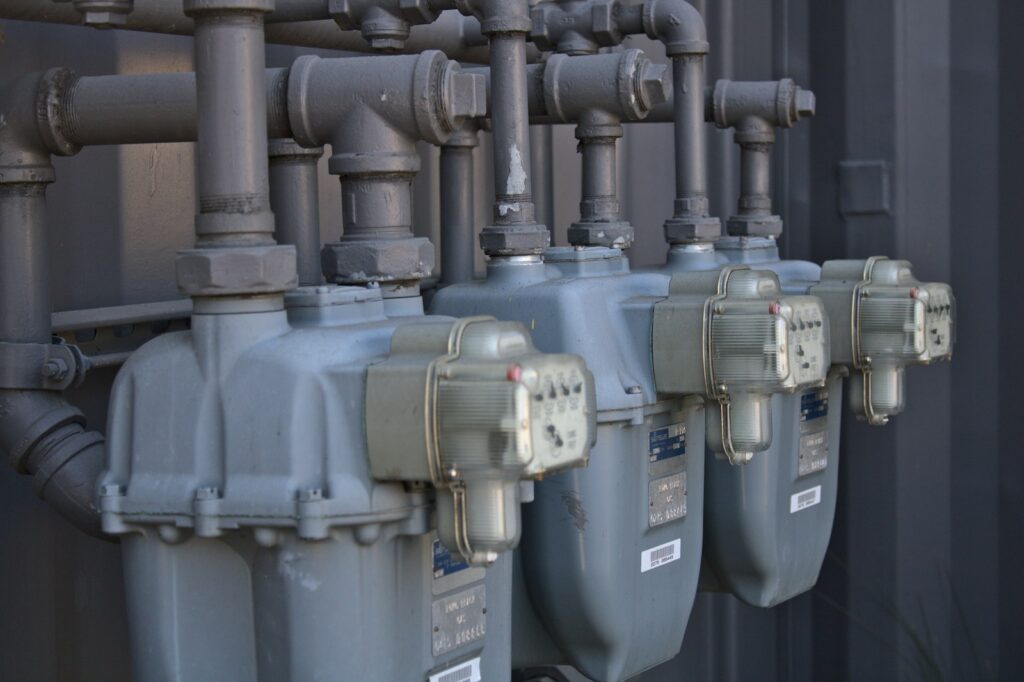
Photo by Doris Morgan on Unsplash
5. Get whole-building data from your utility
In multitenant buildings, tenants often pay their own bills, which leaves owners with gaps. More than 75 utilities now send aggregate whole-building data straight into an owner’s Portfolio Manager account, according to EPA. Check EPA’s utility data map to see whether your utility does. If it does not, EPA offers a sample letter you can send to request the data. Some cities also require tenants to share their usage with owners.
6. Enter at least 12 months of data and check it
Upload monthly bills by spreadsheet, use your utility’s automatic upload, or have a vendor connect through web services. Then run Portfolio Manager’s data quality checker. It catches missing months, overlapping bills, and outliers that can block a score or trigger a request for correction from your city.
7. Share or submit the report
Most jurisdictions have you generate a custom reporting link or data request inside Portfolio Manager and submit through it. Some also require third-party data verification every few years before you submit.
How to get an ENERGY STAR score (and why 75 matters)
The 1–100 ENERGY STAR score compares your building’s source energy use with similar buildings nationwide, after adjusting for weather and how the building is used. According to EPA, a score of 50 represents median performance, and a score of 75 or higher marks a top performer that may be eligible for certification.
Not every building receives a score. EPA’s eligibility criteria include:
| Requirement | What EPA requires |
|---|---|
| Property type | More than 50% of gross floor area (excluding parking) must be eligible property types; ineligible uses can be no more than 25%. |
| Minimum size | 5,000 sq ft for most buildings; 1,000 sq ft for offices, banks, K-12 schools, warehouses, convenience stores and worship facilities; 20,000 sq ft for hospitals. |
| Operating hours | At least 30 hours per week where hours are asked, and at least one worker on the main shift. |
| Energy data | At least 12 full consecutive calendar months for all active meters and all fuel types, covering the whole building. |
| Type-specific rules | Examples: multifamily needs at least 20 units; hospitals at least one staffed bed; offices at least one computer. |
If your building scores 75 or more, it can apply for ENERGY STAR certification. EPA’s certification page says the application must be verified by a licensed Professional Engineer (PE) or Registered Architect (RA), and certification is awarded each year, so the building has to keep performing.
What building owners should do now
- Keep your calendar-year 2026 data clean. Upload bills monthly instead of all at once in the spring.
- Check account access. Make sure more than one person on your team can reach each property, and that properties managed by a former employee or vendor are shared with a current owner account.
- Export a backup. Download your property data and recent reports. It costs nothing and protects you during any system migration.
- Watch for official notices. Rely on emails from EPA, DOE and your city benchmarking program, not secondhand reports, for any changes to logins, links or the API.
- Plan verification early. If 2027 is a verification year for your building, book a PE or RA before the spring rush.
Frequently asked questions
Is ENERGY STAR Portfolio Manager going away?
No. Under the 2026 transition plan, Portfolio Manager moves from EPA to DOE, and DOE now leads its operation. The plan treats it as a system to migrate, not one to retire.
Do I need a new Portfolio Manager account because of the move to DOE?
The transition plan does not ask users to take any action or create new accounts. Watch for official EPA or DOE emails in case login or web address details change during the IT migration targeted before July 2027.
Should property managers benchmark buildings with ENERGY STAR Portfolio Manager?
Yes. It is free, it is the tool most city and state benchmarking laws require, and it gives you the 1–100 ENERGY STAR score that lenders, tenants and buyers recognize. Even where benchmarking is not required, it is the simplest way to track energy performance year over year.
Why doesn’t my building have an ENERGY STAR score?
Usually because the property type is not eligible, the building is below the minimum size, or Portfolio Manager does not have 12 full consecutive months of data for every meter and fuel. A missing tenant meter is the most common cause.
Can Energy Fave manage Portfolio Manager for me?
Yes. We set up properties, collect utility data, run data quality checks, coordinate verification and file with your city or state, for buildings in all 50 states.
Let us handle your Portfolio Manager benchmarking
The move to DOE does not change your deadlines, but it is a good moment to make sure your ENERGY STAR Portfolio Manager setup is accurate and complete. Energy Fave handles energy benchmarking, annual compliance filing, verification and certification from start to finish.
Start your filing and verification by January 31, 2027 and use code EARLYBIRD20 for 20% off. Or use the compliance finder to see which laws apply to your building.
Sources: 2026 ENERGY STAR Program Transition Plan (EPA and DOE); ENERGY STAR score eligibility criteria; How the ENERGY STAR score is calculated; ENERGY STAR building certification; Expanding access to whole-building energy data. This article reflects the transition plan as published on August 28, 2026; check energystar.gov for later updates.