
Energize Denver Ordinance
What is the Energize Denver ordinance?
Energize Denver requires owners of commercial and multifamily buildings of 25,000 square feet or more to benchmark their energy use every year and meet energy performance targets that tighten over time. Smaller buildings of 5,000–24,999 sq ft follow a separate, simpler track.
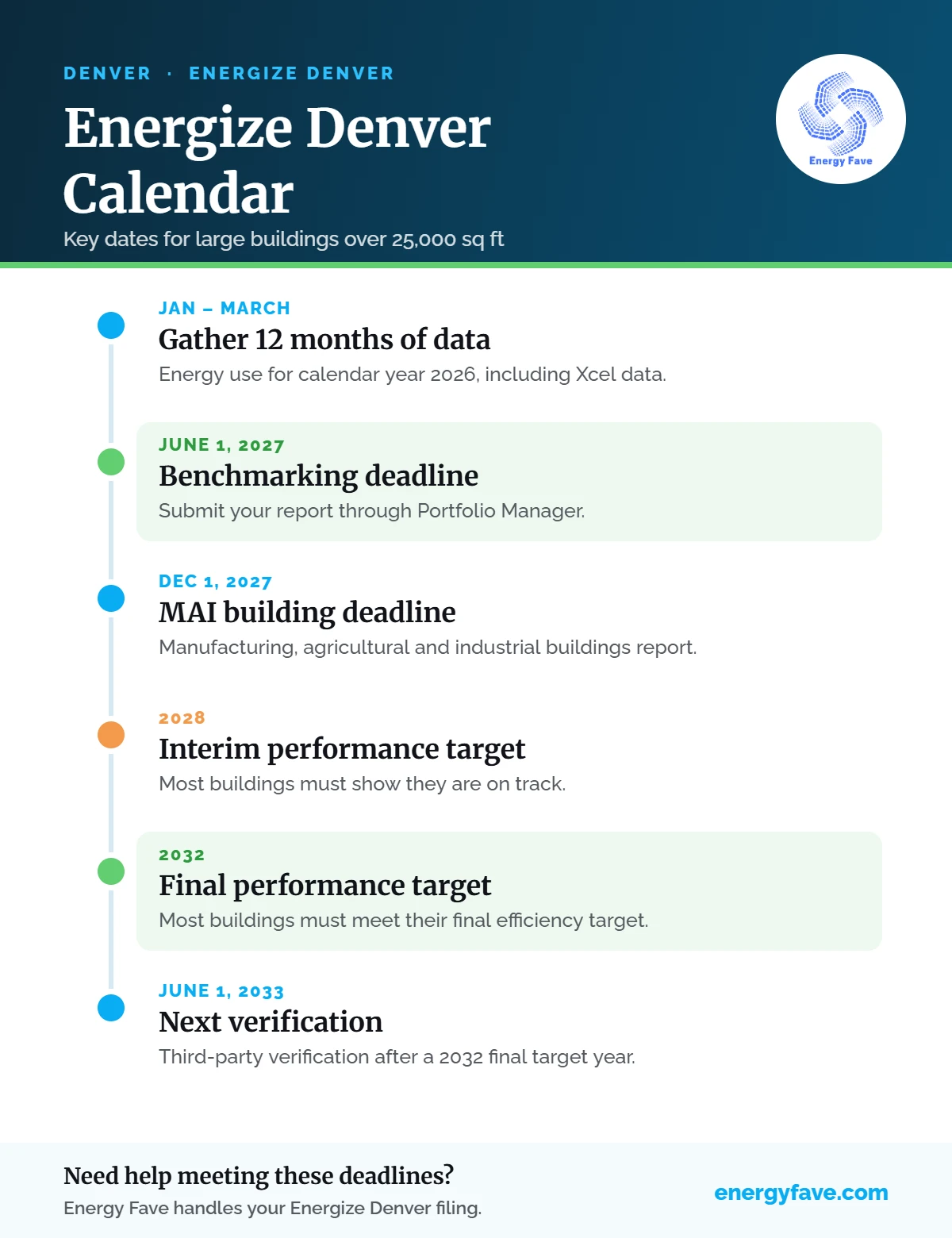
Under the current timeline, most large buildings must show they are on track with an interim target in 2028 and meet their final energy efficiency target in 2032. Benchmarking data is the basis for measuring both, so accurate annual reporting is essential.

What buildings must comply with Energize Denver?
- Large buildings: commercial and multifamily buildings in the City and County of Denver of 25,000 sq ft or more must benchmark every year and meet performance targets.
- Small buildings (5,000–24,999 sq ft): must certify installation of LED lighting or solar panels, or buy enough off-site solar to cover 20% of annual energy use, phased in by building size starting in 2025.
- Manufacturing, agricultural and industrial (MAI) buildings: benchmark on a separate December 1 deadline and follow their own requirements.
Your building may qualify for a benchmarking exemption if it was unoccupied or lacked a certificate of occupancy for the full year, was under renovation all year, is being demolished, is in financial distress, averaged less than 60% occupancy, or uses at least 50% of its energy for industrial or agricultural processes.
What is the penalty for non-compliance?
Denver’s penalties depend on the type of violation:
- Missing a performance target: up to $0.70 per kBtu per year for the gap between your building’s performance and its target.
- Bad or uncorrected data: a separate $2,000 annual penalty for failing to correct benchmarking errors or submitting inaccurate data.
- No report: if you miss a target-year report, the City uses your most recent approved report to assess penalties.
Owners can request a timeline adjustment, but it must be submitted before the end of the target year.
What is the benchmarking compliance process?
Denver owners report through ENERGY STAR Portfolio Manager. A typical filing looks like this:
- First, look up your Denver Building ID and targets in the Energize Denver lookup tool.
- Next, set up or update the property in Portfolio Manager with accurate floor area and use details.
- Then enter 12 months of whole-building energy data. Request aggregated data from Xcel Energy where tenants are separately metered.
- In verification years, have a third party verify your data and submit the verification with your report.
- Finally, submit your report through Portfolio Manager by June 1 and compare your results with your interim target.
How do I check if my building is in compliance?
Look up your Denver Building ID or address in the Energize Denver lookup tool to see your compliance status and your interim and final targets. After each benchmarking window closes, the City also emails each owner their compliance status.
What is the deadline for Energize Denver benchmarking?
Large commercial and multifamily buildings must submit their benchmarking report by June 1 every year. MAI buildings have until December 1.
Next deadlineJune 1, 2027 for calendar-year 2026 data
The first third-party verification deadline was June 1, 2026. The next verification is due by June 1 after your final target year (for example, June 1, 2033 for a 2032 target).
Energize Denver timeline for large buildings
Here is how the benchmarking and performance milestones line up for most buildings over 25,000 sq ft:
| Milestone | What is required | Date |
|---|---|---|
| Annual benchmarkingEvery year | Report 12 months of energy data | June 1 each year |
| First verificationPassed | Third-party verification of 2024 or 2025 data | June 1, 2026 |
| Interim targetMost buildings | Show the building is on track to its final target | 2028 |
| Final targetMost buildings | Meet the final energy efficiency target | 2032 |
| Next verification | Verify data after the final target year | June 1, 2033 (for a 2032 target) |
Check your own dates: some buildings have adjusted timelines. Confirm yours in the Energize Denver lookup tool.
What utilities are required for benchmarking reporting?
- Electricity
- Natural Gas
- District Energy
- Any other purchased fuel
What is the purpose of Energize Denver?
Buildings are Denver’s largest source of greenhouse gas emissions, so the City uses Energize Denver to measure and improve how they perform. The ordinance serves two main goals:
Cut energy use and emissions. Performance targets push buildings to become more efficient and support Denver’s goal of net-zero buildings.
Increase the market value of efficiency. Public benchmarking data lets tenants and buyers compare buildings, rewarding efficient ones. Many owners then go further and pursue ENERGY STAR certification.
Colorado also has a statewide standard; see our Colorado Building Performance Standard guide or our energy benchmarking compliance guide.
See our guides for Colorado BPS, Boulder, Lakewood and Fort Collins, or our full energy benchmarking compliance guide.
Need a verifier? Our Professional Engineers and Certified Energy Managers provide third-party verification services.
Energize Denver FAQs
When are the Energize Denver performance targets?
For most large buildings, the interim target is in 2028 and the final target is in 2032. Confirm your building’s exact timeline in the lookup tool.
What do small buildings have to do?
Buildings of 5,000–24,999 sq ft must certify LED lighting, solar panels, or enough off-site solar to cover 20% of annual energy use, phased in by size from 2025.
How much are Energize Denver penalties?
Up to $0.70 per kBtu per year for missing a performance target, plus a separate $2,000 annual penalty for uncorrected or inaccurate data.
Do I also have to comply with Colorado’s statewide standard?
Denver buildings may also be covered by Building Performance Colorado. See our Colorado guide to check how the two programs interact.
Can Energy Fave help with Energize Denver?
Yes. Energy Fave can benchmark your building, arrange verification, track your targets and submit your report.
Interested in benchmarking help?
Energize Denver at a Glance
- Who's covered
- Large buildings 25,000+ sq ft
- Next deadline
- June 1, 2027The 2026 report was due June 1, 2026. Not filed yet? We can file it now →
- Interim / final target
- 2028 / 2032 (most buildings)
- Target penalty
- Up to $0.70 per kBtu
- Small buildings
- 5,000–24,999 sq ft: LED or solar