

Maryland BEPS, the Building Energy Performance Standards run by the Maryland Department of the Environment (MDE), requires owners of commercial and multifamily buildings of 35,000 square feet or more to benchmark their energy use in ENERGY STAR Portfolio Manager and report it to MDE every year by June 1. Starting in 2030, covered buildings must also meet net direct greenhouse gas emissions standards, with energy use intensity (EUI) standards still to be adopted. The next report is due June 1, 2027, for 2026 data. This Maryland BEPS guide explains who is covered, the 2025 changes from HB 49, the fee, verification, the 2030 and 2040 standards and what owners should do now.
Quick summary
- Covered: commercial and multifamily buildings of 35,000+ sq ft in Maryland. Montgomery County buildings follow the County program instead.
- Annual deadline: June 1. Next: June 1, 2027 (2026 data).
- Annual reporting fee of $100 per building, adjusted for inflation.
- Third-party verification every five years, starting with the 2026 report; the next cycle is 2031.
- Net direct emissions standards start in 2030 and reach net zero direct emissions in 2040.
- MDE intends to adopt EUI standards in 2027, after a cost-benefit study due to the Governor and General Assembly by December 31, 2026.
What is Maryland BEPS?
The Climate Solutions Now Act of 2022 directed MDE to create building energy performance standards for the state’s large buildings. MDE adopted the regulations in COMAR 26.28, and benchmarking began in 2025 with calendar-year 2024 data. The program has a dual design: buildings must cut net direct greenhouse gas emissions (mainly from burning gas and oil on site) and, once adopted, meet site EUI standards. MDE says this dual approach promotes efficient electrification while limiting grid impacts.
In 2025 the General Assembly passed HB 49 (Building Energy Performance Standards, Alterations and Analysis), which added exemptions, special provisions and an annual reporting fee. It also requires MDE to study the costs and benefits of BEPS options, including EUI requirements, and report before EUI standards are finalized. HB 49 took effect October 1, 2025.
Which buildings are covered?
- Commercial, multifamily and State-owned buildings of 35,000 square feet or more of gross floor area. Parking garage area is not counted.
- Groups of buildings that together reach 35,000 square feet and share an electric or gas meter or a heating or cooling system (district systems excluded).
- Owners, not MDE, are responsible for deciding whether a building is covered; do not wait for a notice.
HB 49 removed hospitals from the definition of a covered building. According to MDE’s BEPS page and FAQ, owners can request an exemption through the BEPS Portal for individually designated historic properties, K-12 schools, manufacturing, agricultural and federally owned buildings, demolished buildings, and buildings that are actually smaller than 35,000 square feet. Owners can also apply each year for an exemption if the building was unoccupied or in financial distress, and buildings less than 50% occupied can apply for a delayed baseline. Non-profit status alone is not an exemption.
Montgomery County buildings report to the County, not to MDE. HB 49 lets buildings covered by the County’s own benchmarking and BEPS program (25,000 sq ft and up) comply with that program only, and County compliance counts as State compliance. See our Montgomery County benchmarking page.
Deadlines, fee and verification
| Item | Requirement |
|---|---|
| Annual deadline | June 1, for the previous calendar year |
| 2026 report | Covered 2025 data and was the first report that required third-party verification |
| Next deadline | June 1, 2027 (2026 data) |
| Fee | $100 per building per year, adjusted for inflation, paid in the BEPS Portal by June 1 |
| Third-party verification | Every five years: 2026 report (2025 data), then 2031 |
| Tool | ENERGY STAR Portfolio Manager, shared with MDE, plus the BEPS Portal |
| Help | BEPS.MDE@maryland.gov or 410-537-3183 |
The 2030 interim standard is measured against 2025 levels, and the 2026 report on 2025 data was the first one that had to be third-party verified. That makes the accuracy of your 2025 data unusually important. If your report had gaps, talk to MDE about corrections now. The verifier must be an outside professional, not in-house staff, holding one of the credentials MDE accepts (its FAQ lists credentials such as PE, CEM and CEA), and the owner keeps the Data Verification Checklist for five years. Energy Fave can verify your report.
Performance standards: 2030 to 2040
| Period | Requirement |
|---|---|
| 2025–2029 | Annual benchmarking and reporting; verification in 2026 |
| 2027 | MDE intends to adopt site EUI standards, using data reported in 2026 |
| 2030 | Interim net direct emissions standards begin (the law targets a 20% cut from 2025 levels for average buildings of similar construction) |
| 2030s | Interim standards tighten over time; values by property type are in COMAR 26.28.03 |
| 2040 | Net zero direct emissions |
Buildings that do not meet the direct emissions standard can pay an alternative compliance fee of $230 per metric ton of carbon dioxide equivalent over the standard (in 2020 dollars, adjusted for inflation), rising by $4 each year. Affordable housing can apply each year for a reduced fee. HB 49 also requires the EUI rules to credit on-site renewable energy and biomethane.
What to watch in 2026 and 2027
- December 31, 2026: MDE’s cost-benefit analysis and recommendations to the Governor and General Assembly, which could shape the EUI standards.
- 2027: MDE intends to adopt site EUI standards.
- 2027 legislative session: possible further changes to the program.
How to comply, step by step
- Decide coverage yourself, and file an exemption in the BEPS Portal if your building qualifies.
- Update Portfolio Manager with accurate floor area and property use details.
- Enter 12 months of data for every fuel. Request aggregated data from BGE, Pepco, Delmarva Power, Potomac Edison or Washington Gas where tenants are separately metered. Include oil, propane and district energy.
- Run the pre-submission data review in Portfolio Manager and fix errors.
- Share the report with MDE through Portfolio Manager and the BEPS Portal, and pay the fee, by June 1.
- Estimate your 2030 gap by comparing your direct emissions with the interim standard, then plan projects or budget for the alternative compliance fee.
Electrification and the 2030 standard
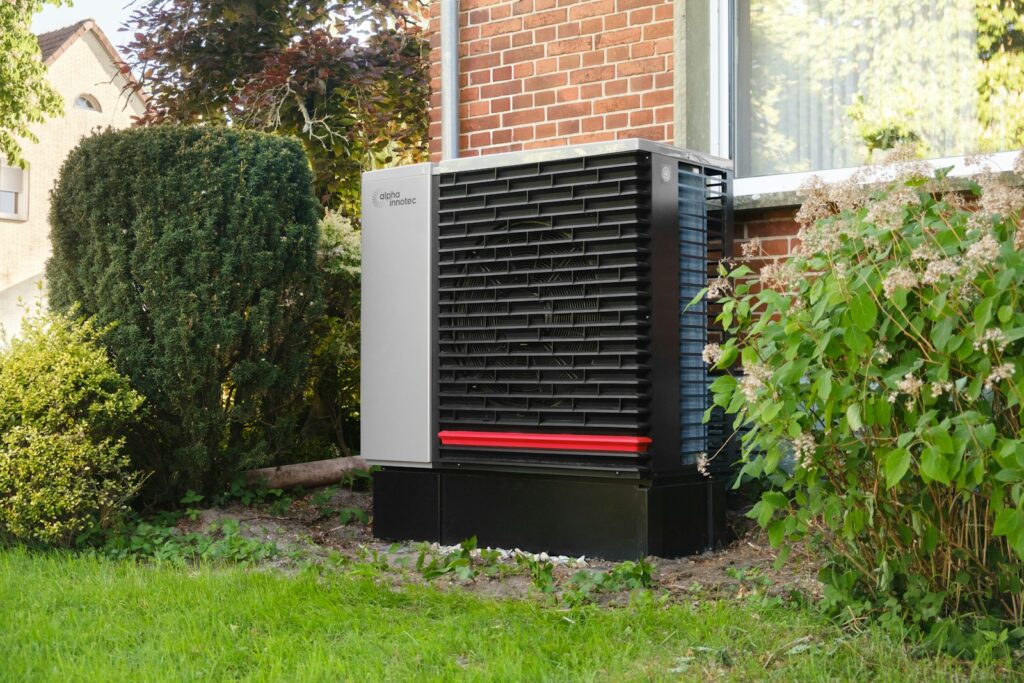
Because Maryland’s first standard targets direct emissions, gas-heated buildings face the biggest gap. Common steps include heat pump conversions, heat pump water heaters, and efficiency upgrades that shrink the size of the equipment you need. An ASHRAE Level 2 audit can price these options and show how each one moves your emissions. Owners in DC face a similar choice under DC BEPS; see our DC BEPS guide and the full Maryland BEPS page.
Frequently asked questions
When is the Maryland BEPS deadline?
June 1 every year, for the previous calendar year. The next deadline is June 1, 2027, for 2026 data.
Which buildings must comply with Maryland BEPS?
Commercial, multifamily and State-owned buildings of 35,000 square feet or more in Maryland, unless MDE approves an exemption. Montgomery County buildings follow the County program.
Is there a fee to report to MDE?
Yes. HB 49 added an annual reporting fee of $100 per building, adjusted for inflation.
When is third-party verification required in Maryland?
Every five years, starting with the 2026 report on 2025 data. The next verification is due in 2031.
Are hospitals covered by Maryland BEPS?
No. HB 49 removed hospitals from the program. Agricultural, K-12 school, manufacturing, historic, federal and demolished buildings can apply to MDE for an exemption through the BEPS Portal.
What happens if a building misses the 2030 standard?
It can pay an alternative compliance fee of $230 per metric ton of CO2e over the standard, rising $4 per year, instead of meeting the standard.
Ready for your June 1, 2027 report and the 2030 standard? Request a quote and Energy Fave will benchmark, verify and model your path to compliance. Have buildings in other states? Check them in our compliance finder.
Sources: Maryland Department of the Environment, Building Energy Performance Standards; MDE, BEPS Program Background; MDE, BEPS FAQ; Maryland General Assembly, HB 49 fiscal and policy note; COMAR 26.28. Rules can change, so confirm with MDE before filing.