
Kansas City Energy Empowerment Ordinance
What is Kansas City's Energy Empowerment Ordinance?
Kansas City, Missouri’s Energy Empowerment Ordinance requires owners of large buildings to benchmark their energy and water use every year in ENERGY STAR Portfolio Manager and report it to the City.
The program began with municipal buildings in 2016 and reached full coverage of private buildings of 50,000 sq ft or more in 2018. In 2021, the City added enforcement, so non-compliance can now lead to fines through the Municipal Court. The City also publishes benchmarking data so tenants and buyers can compare buildings.

What buildings must comply in Kansas City?
- Municipal buildings over 10,000 square feet.
- Commercial, industrial, or multifamily buildings over 50,000 square feet
Your building may qualify for an exemption from reporting if:
- Certificate of Occupancy: The building did not have a valid certificate of occupancy for the entire year being benchmarked.
- Demolition Permit: A demolition permit has been issued and demolition work has commenced, rendering the building unusable and unable to consume energy.
- Low Physical Occupancy: The building has an average physical occupancy below 50% of its intended capacity (e.g., completely vacant or undergoing major renovations).
- Utility Information Unavailable: The owner or representative can demonstrate a legitimate inability to obtain utility bills for the entire year being benchmarked due to circumstances beyond their control.
- Exemption from Public Disclosure: The owner or representative demonstrates that public disclosure of their benchmarking information would reveal confidential information protected by law. They must provide relevant evidence and cite the specific legal source.
- Manufacturing or Industrial Process Energy Use: The building is primarily used for manufacturing or other industrial processes, and the benchmarking results would not be meaningful due to the intensive use of process energy that cannot be separately metered.
What is the penalty for non-compliance?
- Enforcement since 2021: non-compliance is no longer penalty-free.
- Municipal Court: fines are assessed through the City’s Municipal Court process.
- Public disclosure: the City publishes benchmarking data, so a missing report is visible to the market.
What is the compliance process?
Kansas City owners report through ENERGY STAR Portfolio Manager. A typical filing looks like this:
- First, confirm your building is covered and note its Kansas City Building ID.
- Next, gather building details: property use type, square footage, year built and operating data for your property type.
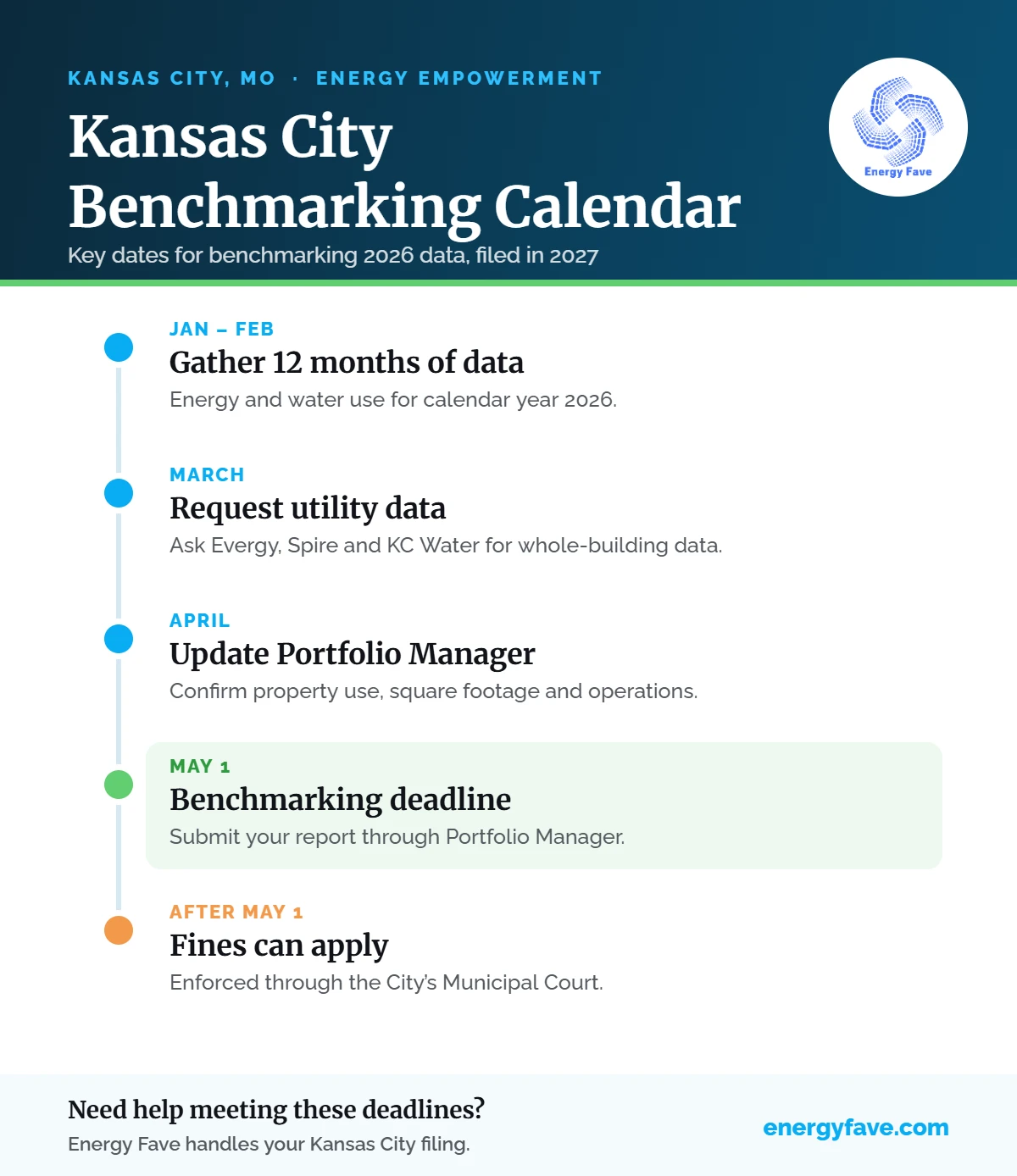
- Then enter 12 months of whole-building energy and water data. Request aggregated data from Evergy, Spire and KC Water where tenants are separately metered.
- Review your ENERGY STAR score and fix any data gaps.
- Finally, submit your report to the City through Portfolio Manager by May 1.
What is the deadline for Kansas City benchmarking?
Kansas City benchmarking reports are due May 1 every year and cover the previous calendar year.
Next deadlineMay 1, 2027 for calendar-year 2026 data
We recommend starting your data collection in February.
Kansas City requirements at a glance
Here is who must report and when:
| Building type | Size | Deadline |
|---|---|---|
| Municipal buildingsSince 2016 | 10,000+ sq ft | May 1 each year |
| Commercial, industrial, institutional, multifamilySince 2018 | 50,000+ sq ft | May 1 each year |
What utilities are required for benchmarking reporting?
- Water
- Electricity
- Natural Gas
- District Energy
- Any other purchased fuel
What is the purpose of Kansas City's ordinance?
The Energy Empowerment Ordinance has three goals:
Save money. Help residents and businesses cut energy and water bills.
Cut emissions. Reduce citywide greenhouse gas emissions from buildings.
Create jobs. Grow local work in building efficiency. Many owners also pursue ENERGY STAR certification.
Nearby owners should also see our St. Louis guide, or visit our energy benchmarking compliance guide.
See our guides for St. Louis, Des Moines and Minneapolis, or our full energy benchmarking compliance guide.
Kansas City energy benchmarking FAQs
Is this ordinance for Kansas City, Missouri or Kansas?
It applies to Kansas City, Missouri. Buildings in Kansas City, Kansas are not covered by this ordinance.
Are there fines for missing the deadline?
Yes. Since 2021, the City can assess fines through its Municipal Court.
Do multifamily buildings have to report?
Yes. Multifamily buildings of 50,000 sq ft or more must benchmark every year.
What data do I need?
12 months of energy and water data, plus property use type, square footage, year built and operating details.
Can Energy Fave file my Kansas City report?
Yes. Energy Fave can collect your data, set up Portfolio Manager and submit your report.
Interested in benchmarking help?
Kansas City at a Glance
- Who's covered
- Private 50,000+ sq ft; municipal 10,000+ sq ft
- Next deadline
- May 1, 2027The 2026 report was due May 1, 2026. Not filed yet? We can file it now →
- Penalty
- Fines via Municipal Court (since 2021)
- Data needed
- 12 months of energy and water
- Reporting tool
- ENERGY STAR Portfolio Manager