
Ann Arbor Energy and Water Benchmarking and Disclosure Ordinance
What is Ann Arbor's benchmarking ordinance?
Ann Arbor benchmarking is required by the Energy and Water Benchmarking and Disclosure Ordinance (City Code Chapter 104). It requires owners of commercial and multifamily properties over 20,000 square feet to benchmark their energy and water use every year and report it to the City.
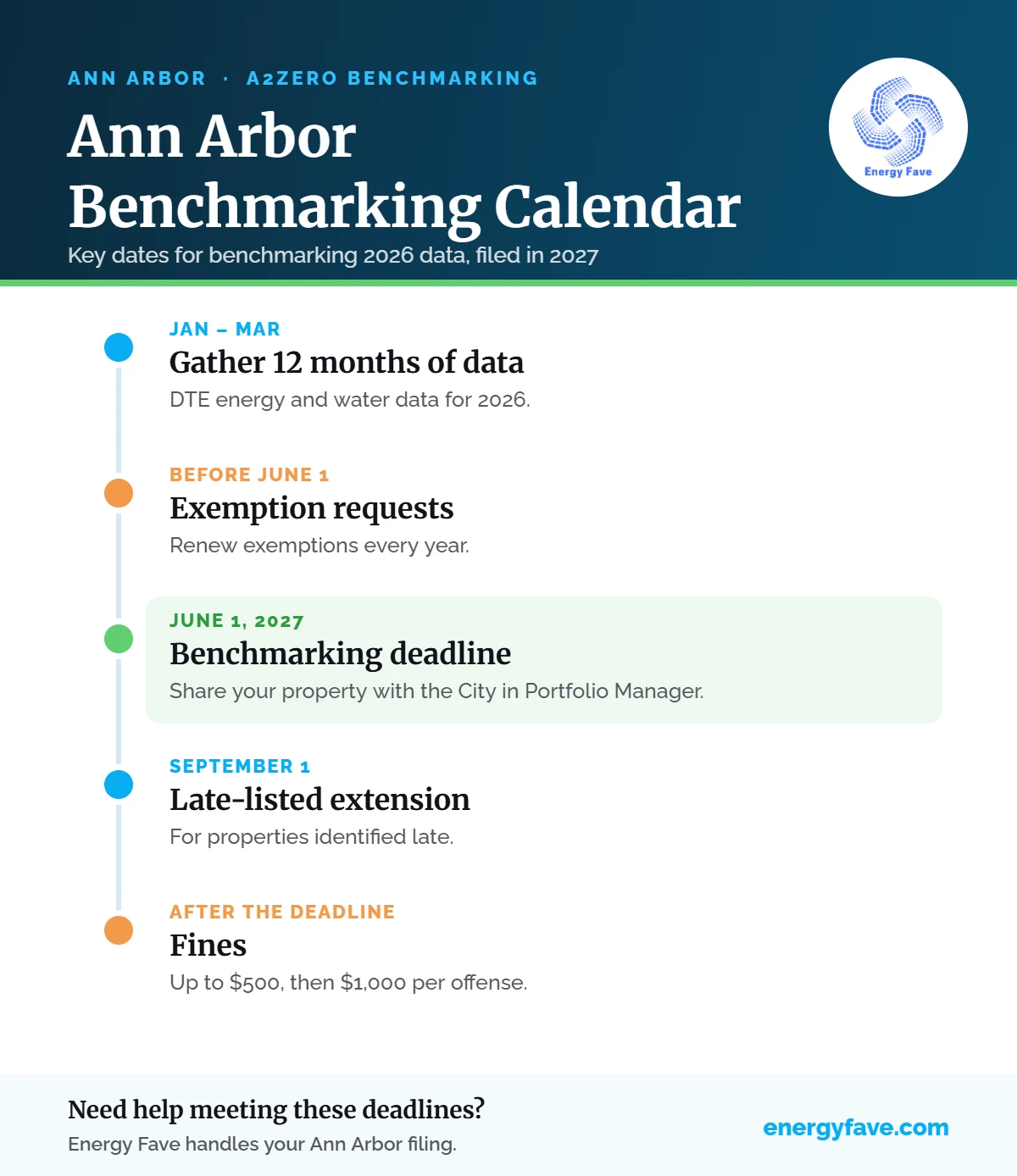
City Council adopted the ordinance in 2021 as part of the A2ZERO carbon neutrality plan. Reports are due every June 1. In January 2026 the City reported more than 80% compliance and launched a public benchmarking map.
What buildings must comply in Ann Arbor?
- Commercial properties over 20,000 sq ft
- Multifamily properties over 20,000 sq ft, including senior living
- Hotels, hospitals and K–12 schools over 20,000 sq ft
- City and public buildings over 10,000 sq ft
Properties with several buildings, such as apartment complexes or campuses, submit one combined report using a single Ann Arbor Building ID (format A2BLD-#####). Owners must comply even if their property is not yet on the City’s Covered Building List.
What is the penalty for non-compliance?
- First offense: a civil infraction with a fine of up to $500.
- Each later offense: up to $1,000, plus court costs. Each day of violation can count as a separate offense.
- False reports: knowingly submitting false data can bring a separate fine of up to $500.
- Public disclosure: results appear on the City’s public benchmarking map.
What is the compliance process?
Ann Arbor owners report through ENERGY STAR Portfolio Manager. A typical filing looks like this:
- First, confirm your property on the Covered Building List and add your Ann Arbor Building ID to Portfolio Manager.
- Next, request aggregated whole-building data from DTE Energy for electricity and natural gas, plus your water data.
- If the utility cannot provide whole-building data, request tenant data using the City’s form.
- Then enter 12 full months of energy and water data for the previous calendar year.
- Finally, share your property with the City in Portfolio Manager to submit your report by June 1.
There is no fee to report. Members of the Washtenaw 2030 District can get free benchmarking support.
What is the deadline for Ann Arbor benchmarking?
Ann Arbor benchmarking reports are due June 1 every year and cover the previous calendar year.
Next deadlineJune 1, 2027 for calendar-year 2026 data
If the City identifies your property less than 30 days before June 1, you can request a three-month extension to September 1. New buildings report after their first full calendar year of occupancy.
Ann Arbor benchmarking exemptions
Exemptions last one calendar year and must be requested every year through the City’s exemption form:
| Exemption | Who qualifies | Still benchmark? |
|---|---|---|
| No certificate of occupancy | No CO for the full reporting year | No |
| Low occupancy | Under 50% occupied for 10 months | No |
| Foreclosure | Property in foreclosure | No |
| Demolition | Demolition permit for the whole property | No |
| Owner-occupied | Solely owner-occupied and not leased | No |
| Trade secrets | Data would reveal trade secrets | Yes, but not made public |
Tenant-paid utilities do not exempt a property. The owner must still benchmark, usually with aggregated whole-building data from the utility.
What utilities are required for benchmarking reporting?
- Water
- Electricity
- Natural Gas
- District Steam
- Any other purchased fuel
What is the purpose of Ann Arbor's ordinance?
Buildings are one of the largest sources of greenhouse gas emissions in Ann Arbor. The ordinance supports the A2ZERO goal of a carbon-neutral community by 2030 in two main ways:
Help owners save. Yearly benchmarking shows where a property uses more energy and water than similar buildings.
Make performance transparent. The public map helps tenants and buyers compare properties. Many owners also pursue ENERGY STAR certification.
See our Detroit guide for Michigan’s other benchmarking city, or our full energy benchmarking compliance guide.
Frequently asked questions
When is the Ann Arbor benchmarking deadline?
June 1 every year. The next deadline is June 1, 2027 for 2026 data.
Are apartment buildings covered?
Yes. Multifamily and senior living properties over 20,000 sq ft must benchmark energy and water.
How much are the fines?
Up to $500 for a first offense and up to $1,000 for each later offense, plus court costs.
Is there a fee to report?
No. Reporting to the City is free.
Can Energy Fave file my Ann Arbor report?
Yes. Energy Fave can request DTE and water data, set up Portfolio Manager, file exemptions and submit your Ann Arbor report on time.
Interested in benchmarking help?
Ann Arbor at a Glance
- Who's covered
- Commercial & multifamily over 20,000 sq ft
- Next deadline
- June 1, 2027The 2026 report was due June 1, 2026. Not filed yet? We can file it now →
- Late penalty
- Up to $500, then $1,000
- Fee
- None
- Reporting tool
- Portfolio Manager + A2BLD ID